Gutters and Downpipes: How They Protect Your Hobart Home
Most Hobart homeowners only think about gutters and downpipes when water is already where it should not be. A stain on the ceiling, a damp patch under the house or a waterfall pouring off the eave in a storm are the usual wake-up calls.
Victory Plumbing Hobart looks after roof drainage across Greater Hobart, and the pattern is familiar. The system works quietly for years, then one blockage or failed joint turns a small job into a big one. This guide explains what each part does, how the pieces work together and what to check on your own home.
What gutters and downpipes actually do
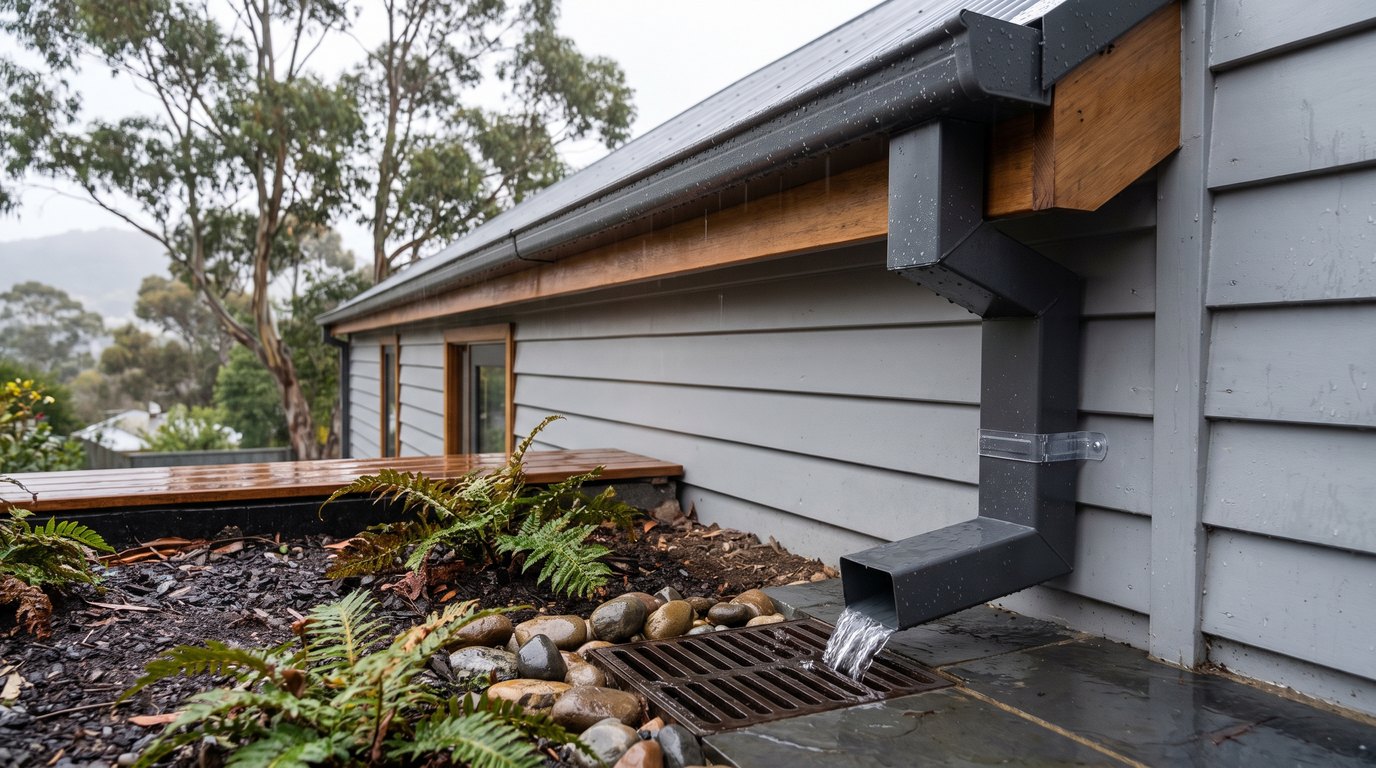
Your roof collects a surprising amount of water. Gutters catch it at the edge of the roof, and downpipes carry it down the wall and away from the building. The National Construction Code describes a downpipe as a pipe carrying rainwater from a gutter to a sub-surface drainage system or ground level.
Together they stop that water running down your walls, pooling around the footings or soaking the subfloor. They also protect fascias, eaves and the roof edge from constant wetting.
The parts of a roof drainage system
A typical house has an eaves gutter fixed to the fascia, brackets that support it, a downpipe at each outlet and a connection into the stormwater system. Some homes also have valley gutters, where two roof planes meet, or box gutters hidden within the roof structure.
The code covers two main eave gutter types, rectangular and D (quad), and your home may have one of several other profiles. Whichever profile you have, the job is the same: collect water, keep it moving and get it to the downpipe.
How the system is designed to work
Roof drainage is not guesswork. The Housing Provisions of the National Construction Code size eave gutters using the local rainfall intensity and the roof area that drains into them. A bigger roof area or heavier rainfall needs a bigger gutter.
A few rules of thumb come straight from the code. Eave gutters need a minimum fall of 1:500 unless they are fixed to a metal fascia, and brackets must be spaced no more than 1.2 metres apart. One downpipe should serve no more than a 12 metre length of gutter.
The code also requires overflow measures, such as slots or a controlled gap at the back of the gutter, so that a blocked gutter spills water away from the building rather than back into the eaves. These provisions are a national baseline and do not cover state variations, so a plumber should confirm what applies to your property.
Why Hobart homes need this to work properly
Hobart is not a particularly wet city by annual totals. The Bureau of Meteorology's long-term record at Ellerslie Road shows an average of about 611 mm of rain a year, falling on roughly 87 days. That means frequent, steady rain rather than a few huge events.
Steady rain is hard on drainage that is slightly blocked. A gutter with a small amount of debris holds water after every shower, and standing water speeds up rust and sagging. Many Hobart homes also sit on sloping blocks, so water that leaves a downpipe in the wrong place can run straight toward the house next door or under your own subfloor.
The Tasmanian angle: leaf litter and bushfire season
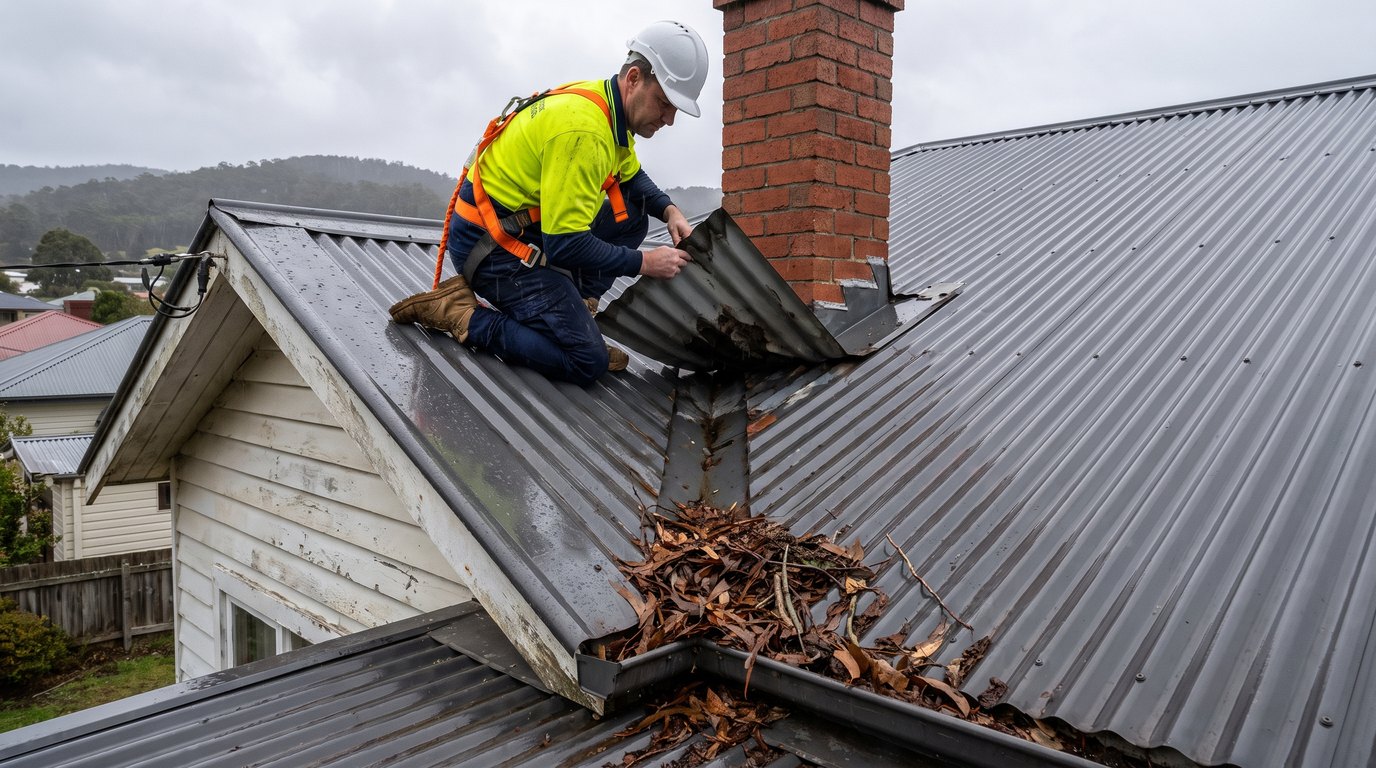
Plenty of Hobart streets are lined with eucalypts, and the suburbs along the kunanyi / Mount Wellington foothills sit close to bushland. Gum leaves, bark and twigs collect in gutters faster than most people expect. A gutter that looks fine in autumn can be packed by spring.
Leaf litter matters for more than drainage. The Tasmania Fire Service lists cleaning gutters and removing leaf litter among the maintenance jobs that help keep a property bushfire-ready. A clear gutter is both a drainage job and a fire-preparedness job, so it is worth doing before summer.
Warning signs your gutters or downpipes need attention
You can check most of these from the ground. Look for water overflowing the gutter during rain, sagging sections, rust or flaking paint, and plants growing from the gutter. Check the downpipes for stains on the wall behind them, as these often point to a leaking joint or a blockage.
Inside the home, watch for damp patches near external walls, peeling paint under the eaves or musty smells in the roof space or subfloor. Any of these can be a sign that water is not leaving the roof the way it should.
If you see a problem, a licensed roof plumber can inspect it and explain the options. Victory Plumbing Hobart offers roof plumbing in Hobart, including gutter and downpipe repairs and replacements, with a quote after we have seen the job.
Keeping your system working
Regular cleaning is the single best habit. Clear leaves and debris from the gutters, then check that water runs freely to the downpipe outlet. Always take care with ladders, and leave work at height to a professional if you are not confident.
Know how problems develop. Our guides to downpipe problems, blockages and overflow and to choosing Colorbond gutters and downpipes for your home go into more detail on repairs and materials. Both are worth a read before you replace anything.
Gutter guards and leaf-catching devices can cut down on debris, but they still need occasional checking. Not every product suits every gutter profile, so ask a plumber before you buy.
When to call a plumber
Call a licensed plumber if you see a section that has pulled away from the fascia, a downpipe that leaks at the joints, repeated overflow after cleaning or any sign of water entering the house. These are not jobs to patch with sealant and hope for the best.
A proper inspection looks at the fall of the gutters, the condition of the brackets, the size of the system against the roof area and where the stormwater goes at the bottom. We can then recommend a repair or replacement based on what we find, rather than quoting over the phone.
Gutters and downpipes are cheap protection compared with the damage they prevent. A short check each season, and a clean before summer, will keep most Hobart homes dry.