Emergency Roof Leak Repairs in Hobart After a Storm
A Hobart storm can turn a roof you have never thought about into the most urgent problem in the house. Water comes through the ceiling, the stain spreads across the plaster, and you are standing in the hallway with a bucket working out who to ring first.
Victory Plumbing Hobart takes these calls after every serious front that pushes up the Derwent. The order you do things in over that first hour matters, both for how much damage you end up paying to repair and for whether your insurer covers it.
Safety Comes Before the Roof
Do not climb up for a look. Tasmania State Emergency Service is direct about this: stay at ground level while checking for damage, and watch for broken glass, loose tiles or roofing iron, and damaged powerlines.
A wet metal roof in a southerly is one of the most dangerous places on your property. Whatever you can see from the ground is enough to describe the problem over the phone.
If a powerline has come down, or anything is sparking, call TasNetworks on 132 004. If someone is in immediate danger, call Triple Zero.
Where water has got into the ceiling cavity, treat every light fitting, downlight and ceiling fan in the affected rooms as a live hazard. Leave the switches alone until a licensed electrician has checked the circuits.
Contain the Water Inside
Move furniture, rugs, power boards and electronics out of the drip zone before you do anything else. A bucket under the drip protects the floor, not the ceiling.
If a section of ceiling is sagging or bulging, that is trapped water sitting on the plaster and it can let go all at once. Keep people and pets out of that room and let a tradesperson release it in a controlled way rather than poking at it yourself.
For storm damage beyond what you can safely manage, Tasmania SES takes storm and flood assistance calls on 132 500.
Photograph Everything Before You Move It
The Insurance Council of Australia's advice is to document the damage with photos and video before you begin any clean-up. Take wide shots of each affected room, then close-ups of the ceiling stain, the wet carpet, the soaked insulation and the water in the bucket.
Photograph damaged contents as well, and note brand and model numbers wherever you can still read them. Five minutes with a phone camera is the cheapest thing you will ever do for a claim.
Keep the receipts for anything you buy to limit the damage, including tarps, buckets and a dehumidifier hire.
Ring Your Insurer Before You Authorise Any Repair
This is the step most homeowners get wrong, and it is the one that costs them. The Insurance Council of Australia advises speaking to your insurer before you attempt or authorise any building work, including emergency repairs, and asking for that permission in writing, because unauthorised work may not be covered by your policy.
Tell them specifically that you have roof damage. You do not need to hunt down your policy documents first, because insurers work from electronic records and generally need only your name, address and date of birth.
If money is tight while the claim is assessed, you can ask the insurer to fast track it. The Insurance Council says an advance payment should follow within five business days of you demonstrating urgent financial need, and that advance is then deducted from the final settlement.
What Actually Happens on a Storm Callout
A roof leak almost never sits directly above the ceiling stain. Water runs along battens, purlins and rafters until it finds a low point and drops, so the real entry point can be metres away from the wet patch.
That is why an honest quote starts with an inspection rather than a number over the phone. Anyone willing to price a roof repair sight unseen is guessing.
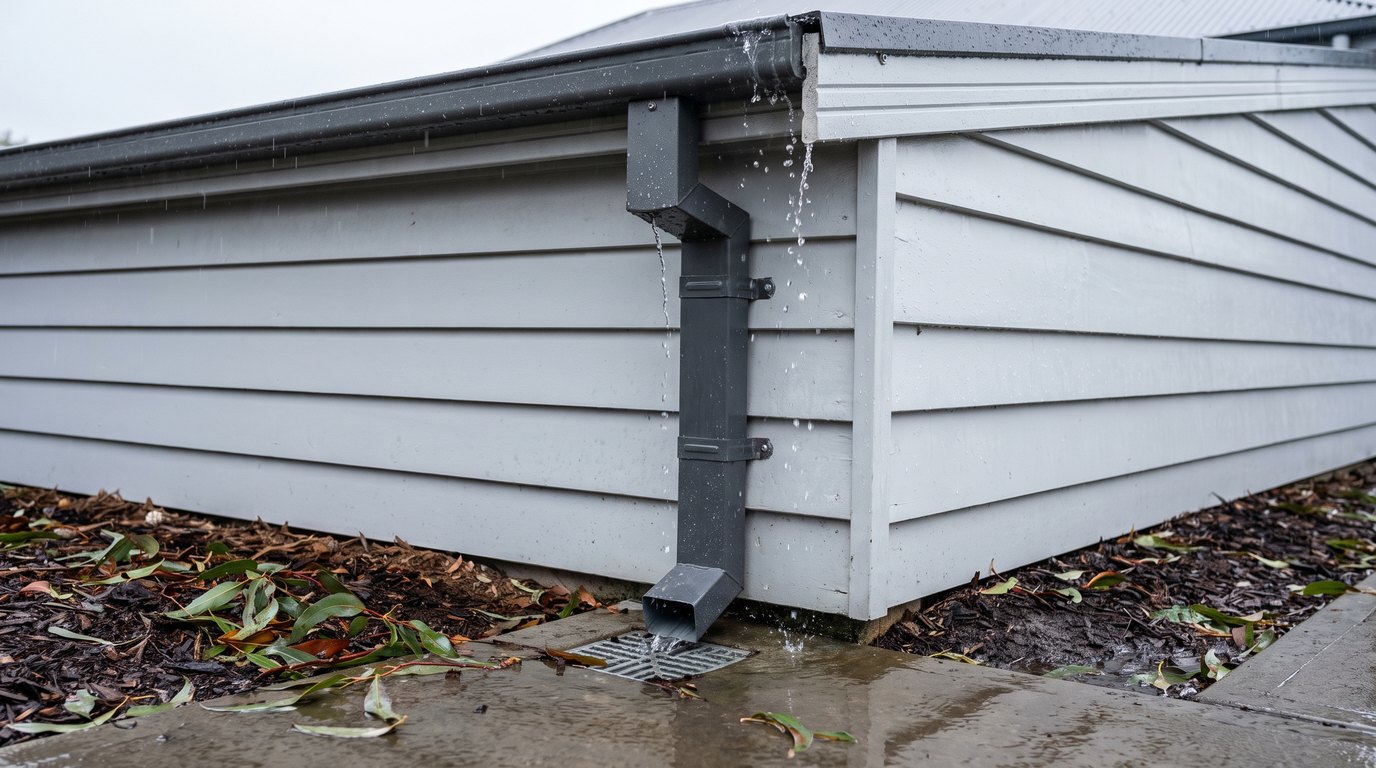
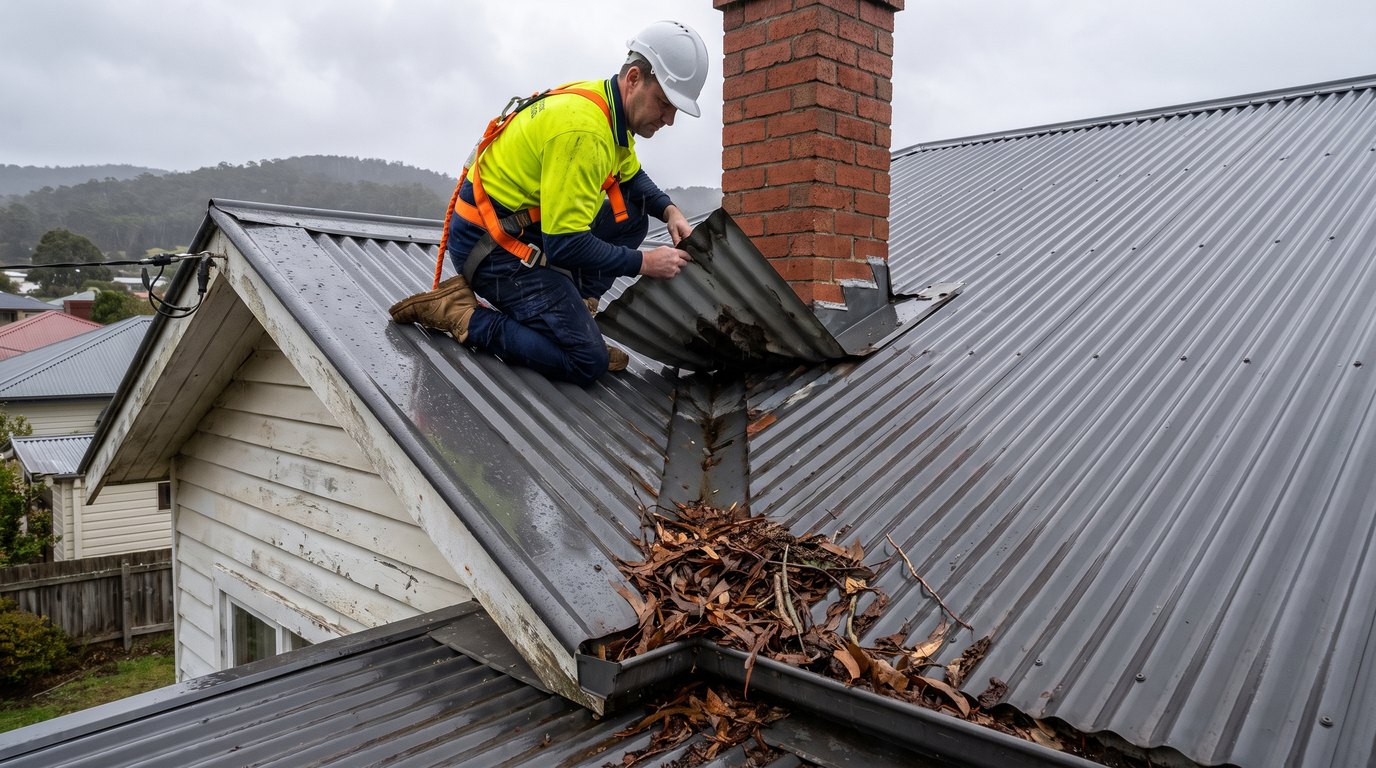
After a Hobart blow, the usual causes are lifted or loosened roof sheets, ridge capping that has cracked or shifted, flashing pulled away from a chimney, skylight or vent penetration, and valleys and gutters packed with gum leaves so heavy rain backs up under the sheeting.
Make-safe work comes first. That means temporary sealing, refastening loose sheets or getting a tarp over the opening to stop water while the weather is still poor. The permanent repair follows once the roof is dry enough to work on safely and your insurer has agreed the scope.
Storm Damage or Wear and Tear
Most home and contents policies cover storm damage, including damage from strong winds, rainwater and hail. What they generally do not cover is damage that happened because something was not looked after, or ordinary wear and tear.
That single distinction decides a lot of roof claims. Rusted-through sheeting, perished flashing sealant and gutters that have not been cleared in years can all be read as maintenance rather than storm damage, even when a storm was the thing that finally let the water in.
A written inspection report that separates what the storm did from what was already failing gives your insurer something concrete to assess. It also tells you honestly what you should be fixing on your own account, which is worth knowing either way.
Roof Plumbing Is Licensed Work in Tasmania
Roof drainage sits inside the plumbing licence here rather than outside it. A standard Tasmanian plumbing licence covers the water, sanitary, drainage and roof stormwater streams, and Consumer, Building and Occupational Services is clear that only a fully licensed roof plumber can advertise roof plumbing work. A licensed builder can hold a roof plumbing endorsement on their building licence.
It is worth asking for a licence number before anyone climbs onto your roof, particularly in the fortnight after a big weather event when out-of-town operators door-knock storm-affected suburbs. Unlicensed work also gives an insurer a reason to question the repair later.
Our team handles these callouts as part of our roof repairs in Hobart, from the first make-safe visit through to the permanent fix and the paperwork your insurer asks for.
Who to Call, and When
- Someone injured or in immediate danger: Triple Zero
- Fallen powerline, sparking or electric shocks: TasNetworks on 132 004
- Storm or flood damage beyond what you can safely handle: Tasmania SES on 132 500
- Water through the ceiling, damaged sheeting, ridge capping or flashing: a licensed roof plumber
- Anything electrical in a wet ceiling cavity: a licensed electrician
If you are not sure whether what you have is an emergency, describe what you can see from the ground and let the plumber make that call. It costs nothing to ask.
Before the Next Front
The cheapest storm repair is the one you never need. Clear gutters and valleys before winter sets in, have loose sheets and lifted flashing refastened while the weather is fine, and get eyes on the ridge capping every couple of years.
It also helps to know how to find the source of a roof leak and what counts as a safe temporary storm fix for a leaking roof, so you are not learning it at ten o'clock on a wet Tuesday night.
If a storm has left water coming through your ceiling anywhere in Greater Hobart, get in touch with Victory Plumbing Hobart and we will take a proper look at what has actually failed.