Plumbing Maintenance: What Hobart Homeowners Should Check Each Month
Most plumbing problems in Hobart homes do not announce themselves. A joint weeps behind a vanity for months, a cistern trickles quietly into the bowl, and the first real sign is a bill that does not match how you have been living.
Victory Plumbing Hobart sees the same pattern right across Greater Hobart. The repairs that hurt are rarely the sudden ones. They are the slow ones nobody went looking for.
The useful part is that most early warnings are visible with a torch and ten minutes, and finding them takes no tools at all.
What you are allowed to do yourself in Tasmania
Most plumbing advice online is written for somewhere else, and some of it will put you on the wrong side of Tasmanian law.
Consumer, Building and Occupational Services publishes the short list of plumbing work an owner can carry out on their own home. It covers repairing or replacing tapware, shower heads and shower hoses like for like, replacing a domestic water filter cartridge like for like, replacing a potable water tank like for like using the same pumps and pipework, putting in an irrigation or lawn watering system connected to the reticulated supply, removing and replacing caps on ground level inspection openings, and unblocking a toilet or shower with a handheld plunger.
Work outside that list must be done by a licensed plumber, and penalties apply for unlicensed work. That is worth knowing before you follow a video about draining your own hot water cylinder.
So treat everything below as inspection rather than repair. Your job is to find things early. What happens next is a separate decision.
The ten minute check worth doing every month
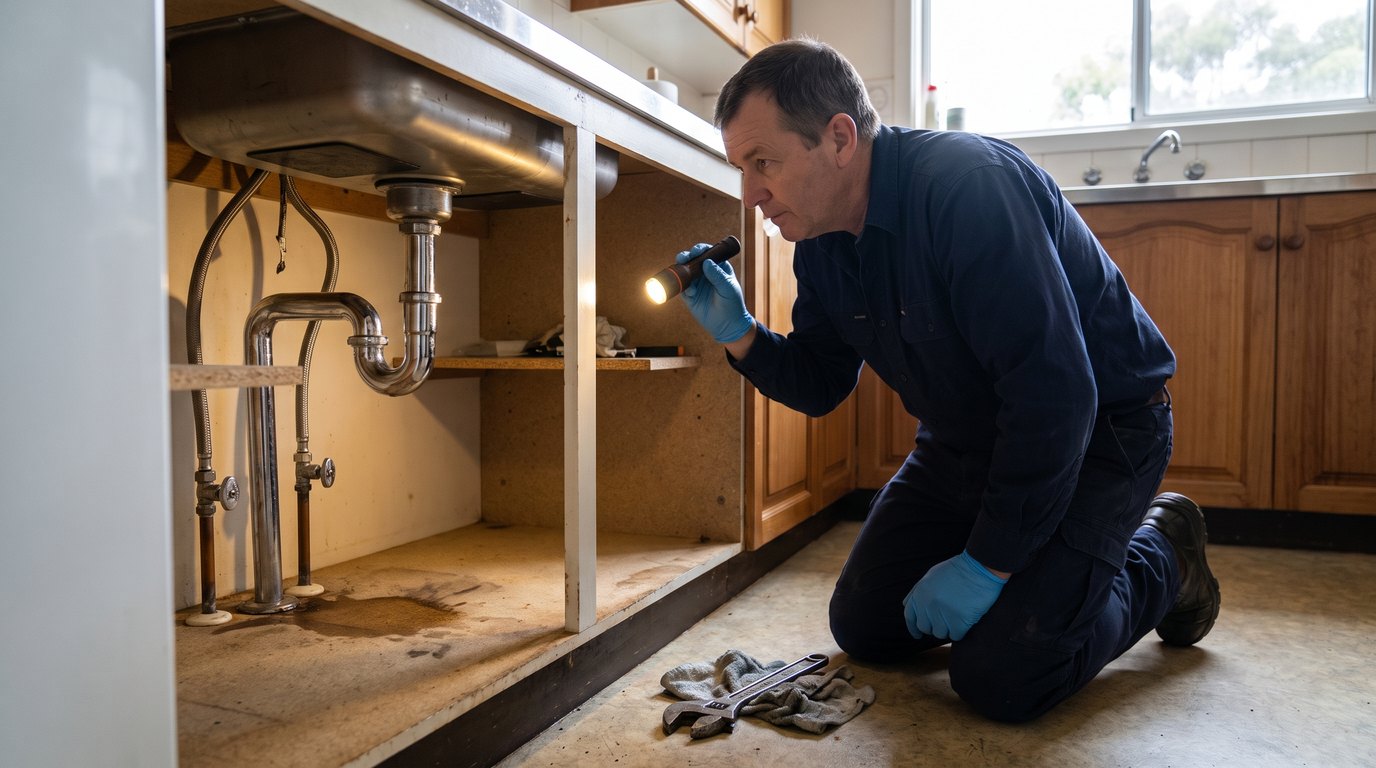
Look under every sink
Take a torch to the kitchen, bathroom, ensuite and laundry. You are looking for damp chipboard, a swollen cabinet base, white or green crust on a fitting, and rust marks around the shut-off valves.
Run your hand along the trap and the flexible hoses. A hose that feels stiff, kinked or blistered is worth replacing before it lets go.
Test the toilet for a silent leak
Put a few drops of food colouring in the cistern and leave it alone for twenty minutes without flushing. Colour appearing in the bowl means water is slipping past the outlet valve.
A silent cistern leak runs day and night. It shows up on your bill long before you ever hear it.
Look after the drains you can reach
Use strainers in the kitchen sink, shower and basin, and empty them rather than pushing the hair through. Let fat and oil cool and put it in the bin, because it sets hard in cold pipework under a Hobart house.
Avoid supermarket drain chemicals. They can damage older pipework, they rarely clear the actual blockage, and they make the job harder and more hazardous for whoever opens the drain afterwards.
Check your overflow relief gully
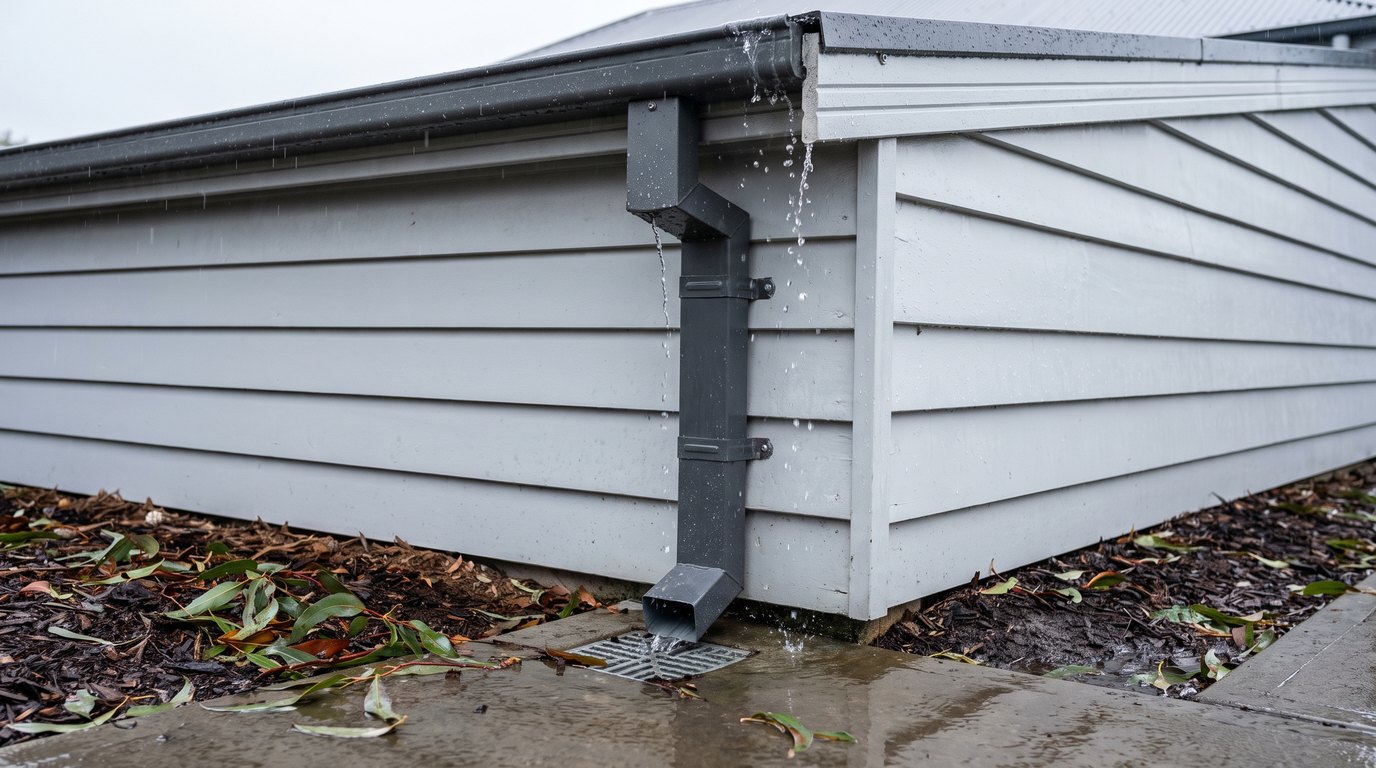
The overflow relief gully is the grated drain outside, set lower than the lowest fixture inside the house. If the sewer backs up, that loose grate is designed to pop open and spill outside rather than into your bathroom.
TasWater is blunt about this one. Property owners are responsible for having a properly working gully, and it must never be covered by pavers, mulch, pot plants or concrete. Check that the grate is not silted up, corroded shut or fixed down.
The overnight meter test
If you suspect a leak but cannot find one, TasWater sets out a simple check. At the end of the day, once nobody needs water, turn off every tap inside and out, flush the toilet, then write down the numbers on your meter.
Read it again first thing in the morning, before anyone uses water. If the numbers have moved, there is a leak somewhere on the property.
That test costs nothing, and it is the single most useful thing on this page.
Know where the water stops, and whose pipe it is
Everyone in the house should know where the main shut-off is and be able to turn it. Check that it actually moves, because a valve nobody has touched in fifteen years often will not.
The boundary matters too. TasWater maintains the pipe from the main to your connection point, which is the meter or the first valve closest to the property boundary. From there to the house is yours. On the sewer side, the line running from the connection point, usually at the inspection opening, to the house is also yours. Stormwater flooding is generally a council matter rather than a TasWater one.
The six monthly job on your hot water system
Storage hot water systems have a temperature and pressure relief valve fitted with a small easing lever. Manufacturers including Rheem instruct owners to operate that lever once every six months to clear deposits and confirm the valve still works.
The water that comes out is scalding, so read the guide that came with your unit first, and if you are not confident, have your plumber do it during a service. Rheem is equally clear that owners should not attempt repairs on the unit itself.
A relief valve that dribbles constantly, discoloured hot water, or a system well into its service life is a conversation worth having before winter rather than during it.
Why Hobart timing matters
Hobart is not a hot dry climate, and a maintenance calendar should reflect that. Bureau of Meteorology records for the Hobart Ellerslie Road site put the mean July minimum at 4.6 degrees, with June and August close behind.
Rain here is persistent rather than dramatic. The long term average is about 611 millimetres a year spread across roughly 87 days of rain, and mean 9am humidity sits near 79 per cent in June.
Cold, damp and constant means two things. Small leaks dry slowly and feed mould instead of disappearing, and gutters and downpipes stay loaded for months at a time. Booking work in autumn, before the cold settles in, is far easier than chasing a plumber during a July cold snap.
What a plumber checks that you cannot
A monthly look catches the obvious. A proper service goes after what is hidden: water pressure at the fixtures, tempering and relief valve operation, the condition of the hot water unit, drain flow under load, and pipework in the roof space or under the floor.
If you want a sense of intervals, how often to service your plumbing system covers the usual schedule, and there is a longer list of signs your home needs plumbing maintenance if something already feels off. For anything past a torch and a look, the plumbing maintenance team at Victory Plumbing Hobart can inspect the system properly and tell you what genuinely needs doing.
If a hidden leak has already cost you
Where a leak was concealed, TasWater may provide a rebate of up to 50 per cent of the water usage amount above your average bill. You need written evidence that a licensed plumber repaired it, along with their concealed water leak remission form, and the rebate is limited to one per property for the duration of your ownership.
Worth knowing before you pay a shock bill and move on.
Frequently asked questions
What does plumbing maintenance actually mean?
It means planned inspection and servicing instead of waiting for a failure. That covers checking for leaks, testing valves and water pressure, servicing the hot water system and keeping drains clear, so faults turn up while they are still small.
How often should a Hobart home have a plumbing service?
Most homes suit an annual service, with a quick owner check each month in between. Older homes, rentals and properties with a history of drain trouble often need more, and autumn is a sensible time to book.
Can I fix a dripping tap myself?
Repairing or replacing tapware like for like sits on the Tasmanian list of work an owner may do on their own home. If the drip is coming from the body of the tap, from the wall, or from a mixer cartridge you cannot match, that is plumber territory.
Is preventive maintenance really cheaper?
We cannot promise a figure without seeing your property. What we can say is that planned work happens in business hours at a quoted price, while a burst pipe or a failed cylinder rarely has that courtesy.