Why You Have No Hot Water Pressure (and How to Fix It)
A weak trickle from the hot tap can make a mess of the simplest routines. Showers take twice as long, the washing up drags on and the whole house ends up queuing for the bathroom.
The good news is that low hot water pressure almost always has a specific, findable cause. Some checks are safe to do yourself in a few minutes. Others sit inside the hot water system and are a job for a licensed plumber.
This guide from Victory Plumbing Hobart walks through both, with a few pointers that apply specifically to Hobart homes.
First, Work Out Which Problem You Have
Before anything else, run a cold tap and a hot tap side by side and compare the flow.
If both hot and cold are weak, the cause is likely on the supply side. That could be the mains, a partly closed main stop valve or a shared pressure valve. If the cold flow is strong and only the hot is weak, the restriction sits somewhere in the hot water circuit between your cylinder and your taps, which narrows the search considerably.
It also pays to be clear about what you are dealing with. Water that runs hot but slowly is a pressure problem. If you have no hot water at all, the cause is usually heating related rather than flow related, and the troubleshooting looks quite different.
Four Safe Checks Before You Call Anyone
1. Test more than one outlet
Check the hot flow at the shower, the basin, the kitchen sink and the laundry. If only one outlet is weak, the fault is almost always in that fixture rather than in the system itself.
2. Clean the showerhead or tap aerator
Showerheads and tap aerators clog gradually as fine debris collects in their small openings. Unscrew the fitting, soak it in white vinegar for a few hours, give it a scrub and refit it.
While you are there, check whether the showerhead is a water-saving model. If you have recently moved in, what feels like a pressure fault may simply be a low-flow fitting doing its job.
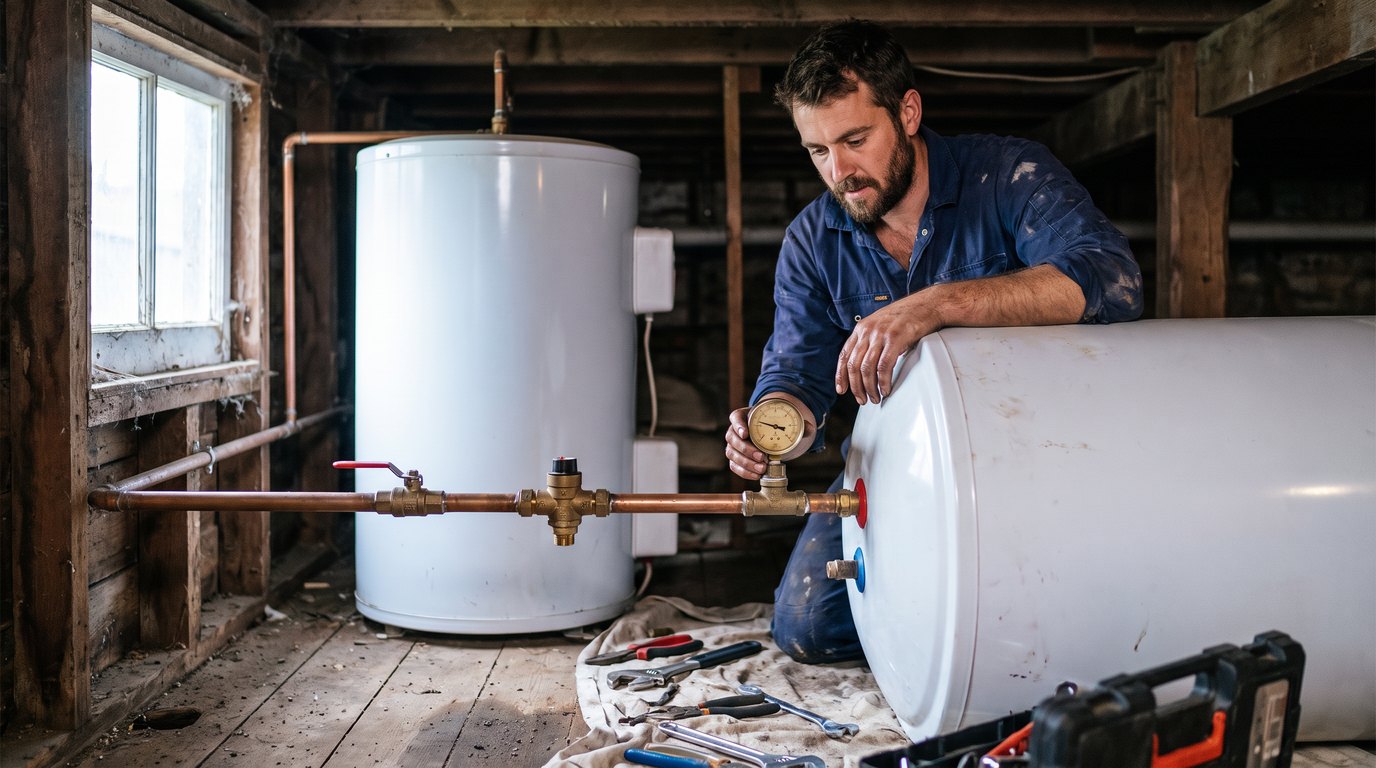
3. Check the isolation valve on your cylinder
Every hot water cylinder has an isolation valve on the cold inlet pipe that feeds the unit. After a service, repair or installation it is sometimes left partly closed, which starves the hot side while leaving cold pressure untouched.
Find the lever or dial on the pipe running into the cylinder. A lever should sit in line with the pipe when fully open. This check takes less than a minute and solves more cases than you might expect.
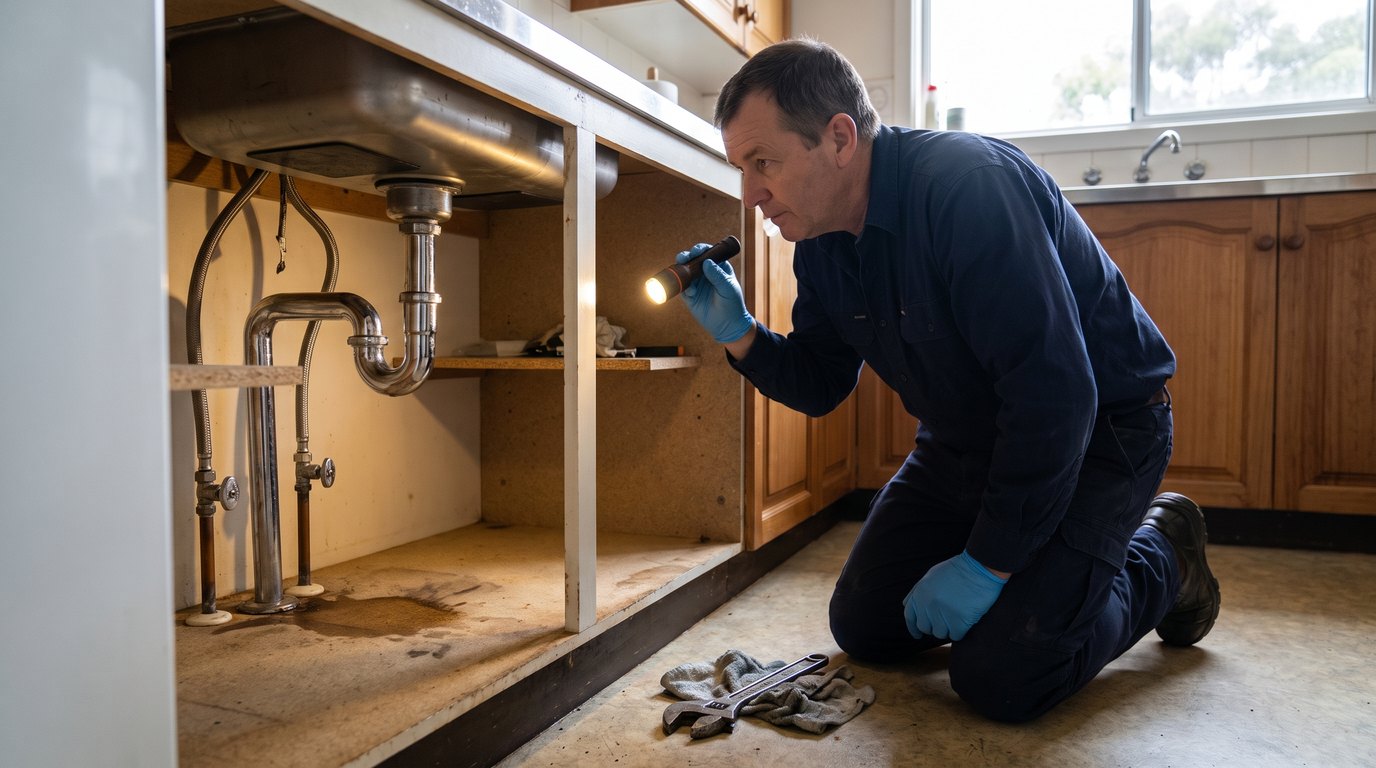
4. Look for signs of a leak
Turn off every tap and water-using appliance, then watch your water meter. If the numbers keep moving, water is escaping somewhere.
Damp patches, a bill that has jumped without explanation or the sound of running water behind a wall all point the same way. A leak on a hot water line or around the cylinder needs prompt attention before it causes real damage.
Causes That Sit Inside the Hot Water System
If the quick checks have not moved the needle, the restriction is usually in one of the components below. Under Tasmanian rules these are jobs for a licensed plumber rather than a weekend project, and we explain why further down.
Sediment inside the cylinder
Sediment settles at the bottom of storage cylinders over the years. Most of the time it costs you heating efficiency rather than pressure, but if it reaches the outlet fitting it can choke the flow leaving the tank.
A cylinder flush by a plumber clears the build-up. If the pressure drop comes with discoloured water or rumbling noises from the tank, mention that when you book, because it changes the diagnosis.
A failing tempering valve
Most Tasmanian hot water systems have a tempering valve on the hot outlet. Under the state's heated water requirements, it blends in cold water so that showers, baths and basins receive water at no more than 50 degrees Celsius, while the water stored in the cylinder stays at 60 degrees or above to prevent bacteria such as Legionella growing.
Only hot water passes through this valve. When it sticks or scales up internally, it restricts the hot side alone, which is why hot pressure can fade over months while the cold stays perfect. Hot water arriving cooler than it used to, alongside falling pressure, is a classic sign.
A worn pressure limiting valve
Australian plumbing standards cap the water pressure at outlets inside a home at 500 kilopascals, and many properties have a pressure limiting valve fitted to hold mains pressure under that line. As these valves age, their internal parts wear and they can start restricting flow well below their intended setting.
Hot water pipe runs are usually longer than cold ones, so the hot taps show the loss first. Testing a pressure limiting valve with a gauge, then adjusting or replacing it, is quick work for a plumber.
Tired flexible hoses
The braided flexible hoses that connect a hot water unit to the household pipework can deteriorate internally with no outside warning. The rubber lining swells or partially collapses and quietly pinches the flow.
Failed flexible hoses are also a leading cause of internal water damage in Australian homes when they eventually burst. If yours are old, having them inspected is worthwhile for more reasons than pressure alone.
A different story for continuous flow units
Storage cylinders and continuous flow units fail in different ways. Most gas continuous flow units need a minimum flow rate before the burner will fire, so a restriction can show up as lukewarm water or no hot water at all rather than a weak but steady stream. Our guide to gas hot water systems covers how these units behave in more detail.
The Hobart Factor: Old Pipes More Often Than Hard Water
Mainland troubleshooting guides tend to blame hard water for nearly every pressure problem. Hobart is different. Our mains water is among the softest of any Australian capital, so the aggressive limescale that clogs pipework in many mainland cities is far less common here.
The local culprit is age. Many Hobart suburbs are full of homes built well before the 1980s, and plenty still carry their original galvanised steel water pipes. These corrode from the inside, narrowing the bore year after year, and the hot lines usually go first because heat accelerates corrosion.
Tasmanian winters do not cause low pressure, but they certainly expose it. Colder inlet water and longer showers make a weak hot flow far more noticeable in July than in January. If your hot pressure has faded slowly and your home is more than 40 years old, the pipework deserves a close look before anyone blames the cylinder.
Repair, Service or Replace?
If your cylinder is more than about ten years old and the pressure drop has arrived with other symptoms, weigh up repair against replacement before fixing parts one at a time.
Signs that point towards the end of a cylinder's life include discoloured hot water, rumbling or banging from the tank, damp around the base and hot water that runs out faster than it used to. A single failed valve on an otherwise healthy system is usually a simple repair. Several symptoms arriving together tell a different story.
We cover the decision in more detail in our guide on when to replace your hot water system. An inspection is the only way to know for certain, so we always assess the system before recommending either path.
Why This Is Not a DIY Job in Tasmania
Cleaning a showerhead or opening an isolation valve is fair game for any homeowner. Beyond that, Tasmania draws a firm line.
Consumer, Building and Occupational Services (CBOS) requires all maintenance and repairs on hot water systems to be carried out by a licensed plumber, and penalties apply for unlicensed plumbing work. That includes adjusting or replacing tempering valves and pressure limiting valves.
The rules exist for good reason. A tempering valve set wrong risks scalding at the tap or bacteria growing in the cylinder, and both risks are serious. Leave the valve work to someone licensed and insured to do it.
Getting Your Hot Water Pressure Back
Start with the safe checks. Compare hot and cold, test several outlets, clean the showerhead, confirm the isolation valve is fully open and watch the meter for signs of a leak. If none of that solves it, the cause is almost certainly a valve, the cylinder itself or the pipework.
Victory Plumbing Hobart diagnoses and repairs these problems across Greater Hobart every week. Our licensed plumbers can test your valves, flush the cylinder, assess ageing pipework and give you honest advice on whether repair or replacement makes better sense. Learn more about our hot water cylinder services in Hobart or get in touch for a quote.
A weak hot tap rarely fixes itself. The sooner the cause is found, the cheaper it usually is to put right.