No Hot Water? Common Causes and How to Fix It
A cold shower on a Hobart winter morning gets your attention quickly. The good news is that most no hot water calls come down to one of about six faults, and two or three of them you can rule out yourself in a few minutes.
This guide from Victory Plumbing Hobart works through those checks in the order a plumber would do them. It also draws a clear line between what a homeowner can safely look at and what has to be left to a licensed trade.
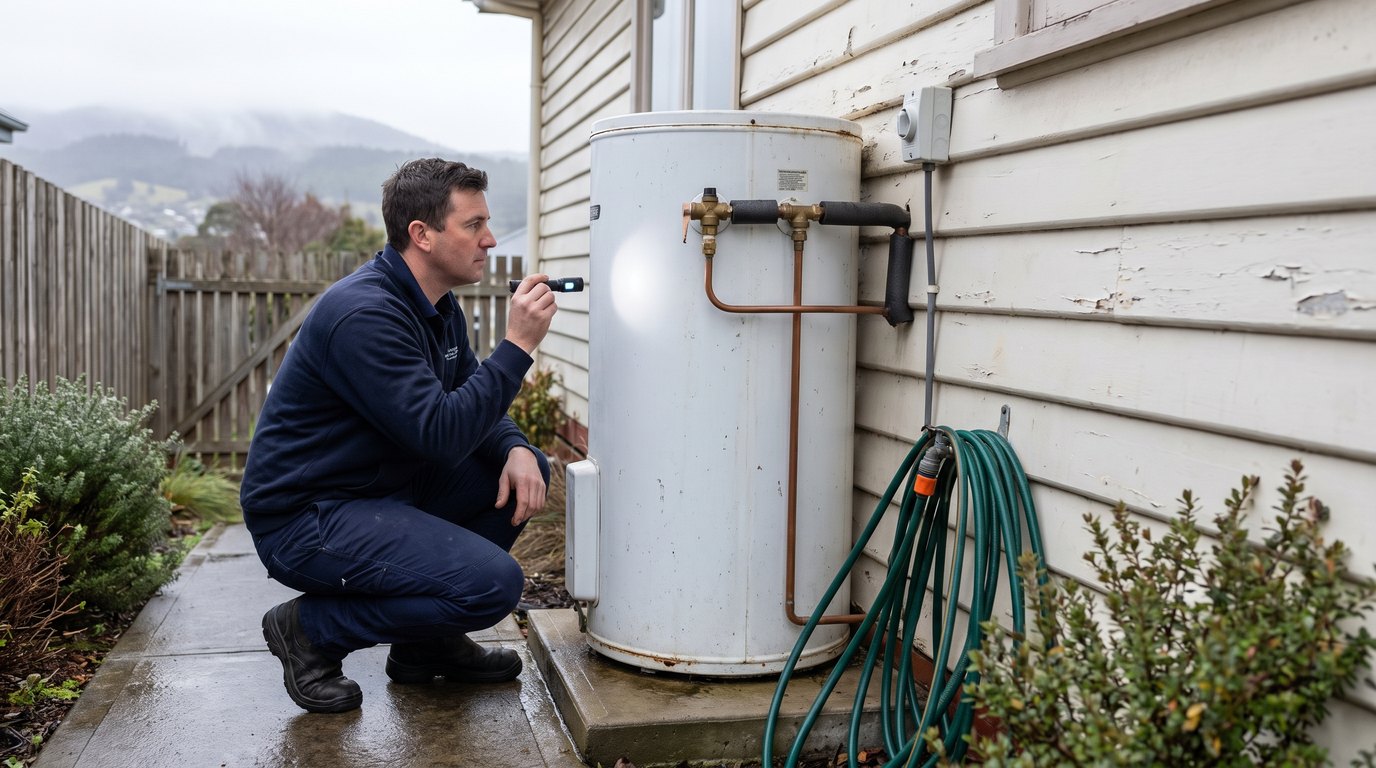
Start by working out what type of system you have
Every step below depends on how your water is heated, so establish that first.
- Electric storage: a tall cylinder with an electrical connection and no gas pipe
- Gas storage: a similar looking cylinder, but with a gas pipe and usually a small access panel near the base
- Continuous flow: a compact box mounted on an outside wall, with no tank at all
- Solar: panels on the roof feeding a tank, either on the roof or at ground level
- Heat pump: a tank with a fan and compressor unit sitting on top
While you are there, photograph the brand and model label. If you do end up needing a plumber, that one photo saves a lot of back and forth about parts and age.
Check the power supply first
Electric storage systems, heat pumps and solar units with an electric booster all stop making hot water the moment they lose power. Go to your switchboard and find the circuit marked hot water or HWS.
If the breaker has tripped, switch it back on. A storm or a power surge is often all it takes.
Then give it time before you decide it has not worked. A full cylinder needs a few hours to recover, and many Tasmanian homes have their hot water wired to a separate lower rate heating and hot water tariff, known here as Aurora Energy's Tariff 41. Some of those circuits only heat during set hours, which is why a fault that started yesterday afternoon shows up as a cold shower the next morning.
If the breaker trips again straight away, stop resetting it. That points to a failed element or a wiring fault, and repeated resets are a shock and fire risk.
Electric storage units also have a high limit safety cut-out that trips if the water overheats. Resetting it means opening an access panel, so leave that one to a plumber.
If you are on gas, check the supply and the pilot light
Gas deserves a note in Tasmania, because far fewer homes here run on it than most national advice assumes. Renewables, Climate and Future Industries Tasmania puts the state at roughly 13,500 residential natural gas customers in total, so a gas connected home in Hobart is in a small minority, and plenty of properties run bottled LPG instead.
Start by testing another gas appliance. If the cooktop will not light either, the problem is the supply rather than the water heater. With LPG, check whether the bottle has run empty or the changeover valve has been knocked out of position.
Older gas storage units use a standing pilot light that a strong gust can blow out. Only relight it if your unit carries lighting instructions and you can follow them exactly. If the flame will not stay lit once you release the knob, the thermocouple has usually failed, and that is gas fitting work.
If you smell anything like rotten eggs, stop there. Do not attempt to relight anything, turn the gas off at the meter or bottle if you can do that safely, ventilate the area and call a licensed gas fitter.
Hot pipes but cold taps points to the tempering valve
This one catches people out. The cylinder is full of hot water, the pipes leaving it are hot, and the shower still runs lukewarm or cold.
Australian plumbing rules cap the temperature delivered to fixtures used for personal hygiene at 50 degrees, so a tempering valve sits on the pipework and blends cold water in to reach that. Storage systems still hold water at 60 degrees or above, because that is what keeps Legionella under control inside the tank.
That valve is a mechanical part with springs and seals, and it wears out. When it fails it can choke the hot side almost entirely.
You can check for the symptom safely. Use the back of your hand near the pipework at the top of the unit, and if it feels warm while every hot tap in the house runs cold, the tempering valve is the likely culprit. Replacing it is licensed plumbing work.
Lukewarm water, or hot water that runs out too fast
If there is some hot water but never enough, you are usually looking at a thermostat, a heating element or sediment.
A failed thermostat can leave water under-heated, over-heated or simply inconsistent from one day to the next. In a larger cylinder with two elements, losing one often produces a short burst of hot water before it turns cold.
Sediment is the slower version of the same problem. Minerals settle on the bottom of the tank and act like insulation between the element and the water, so the system works harder and delivers less. Knocking or rumbling while it heats is the usual giveaway.
Sometimes nothing is broken at all and the system is just undersized. If the household has grown, or everyone showers back to back, a cylinder that coped five years ago may simply be out of capacity.
Water pooling around the unit
A slow drip from the pressure and temperature relief valve is normal. Water expands as it heats and that valve is how the system sheds the extra pressure.
A steady stream is not normal. A relief valve stuck open by grit will quietly send your hot water onto the ground, and needs replacing.
Water coming from the body of the cylinder is a different matter again. A split or rusted through tank cannot be patched, and it means replacement rather than repair. Shut the water off at the isolation valve if you can reach it, then get a plumber out before it damages anything nearby.
When the system is simply worn out
Storage cylinders contain a sacrificial anode, a metal rod that corrodes in place of the steel tank. Manufacturers generally suggest having it checked around every five years, although how quickly it goes depends on your water and how much you use.
Once the anode is spent the tank starts corroding from the inside, and that clock runs quietly for years before the first leak appears.
A newer unit with one clear fault is usually worth repairing. A cylinder that has needed several visits, leaks from the body, or delivers discoloured water is telling you something different, and there are clearer signs it is time to replace rather than repair that are worth knowing before you spend again on parts. If you are weighing up what to put in next, how gas hot water systems compare on running costs is a sensible place to start.
What you can check, and what you should not touch
In Tasmania, plumbing is a licensed occupation administered by Consumer, Building and Occupational Services under the Occupational Licensing Act 2005, and gas fitting carries its own separate licence on top of that.
Safe for a homeowner: looking at the switchboard, testing another gas appliance, checking the LPG bottle, looking for visible leaks, reading an error code on the display, and photographing the model label.
Not safe, and not legal either: opening panels, testing elements, adjusting valves, touching wiring, or working on any gas component. Beyond the obvious safety risk, unlicensed work on these systems can void both your manufacturer warranty and your home insurance.
Renting in Hobart? Hot water is an essential service
Worth knowing if you rent or manage property here. Hot water is listed as an essential service under Tasmania's Residential Tenancy Act 1997, and where an essential service stops working the owner must have it restored as soon as practicable once they have been told about it.
So report it straight away, and put it in writing so there is a record of when you raised it. For property managers, that same provision is the reason a hot water fault should not sit in the general maintenance queue behind a sticking window.
Getting the hot water back on
Working through the checks above will often either fix the problem outright or narrow it to one component, which makes the repair visit shorter and the invoice smaller.
When you run out of safe options, that is the point to call someone in. Victory Plumbing Hobart handles hot water repairs, servicing and replacements for homes right across Greater Hobart, and we diagnose the fault properly before recommending anything.
Have that photo of the model label ready when you call. It is the fastest way to get the right part on the van first time.