When to Replace Your Hot Water System: Signs to Watch For
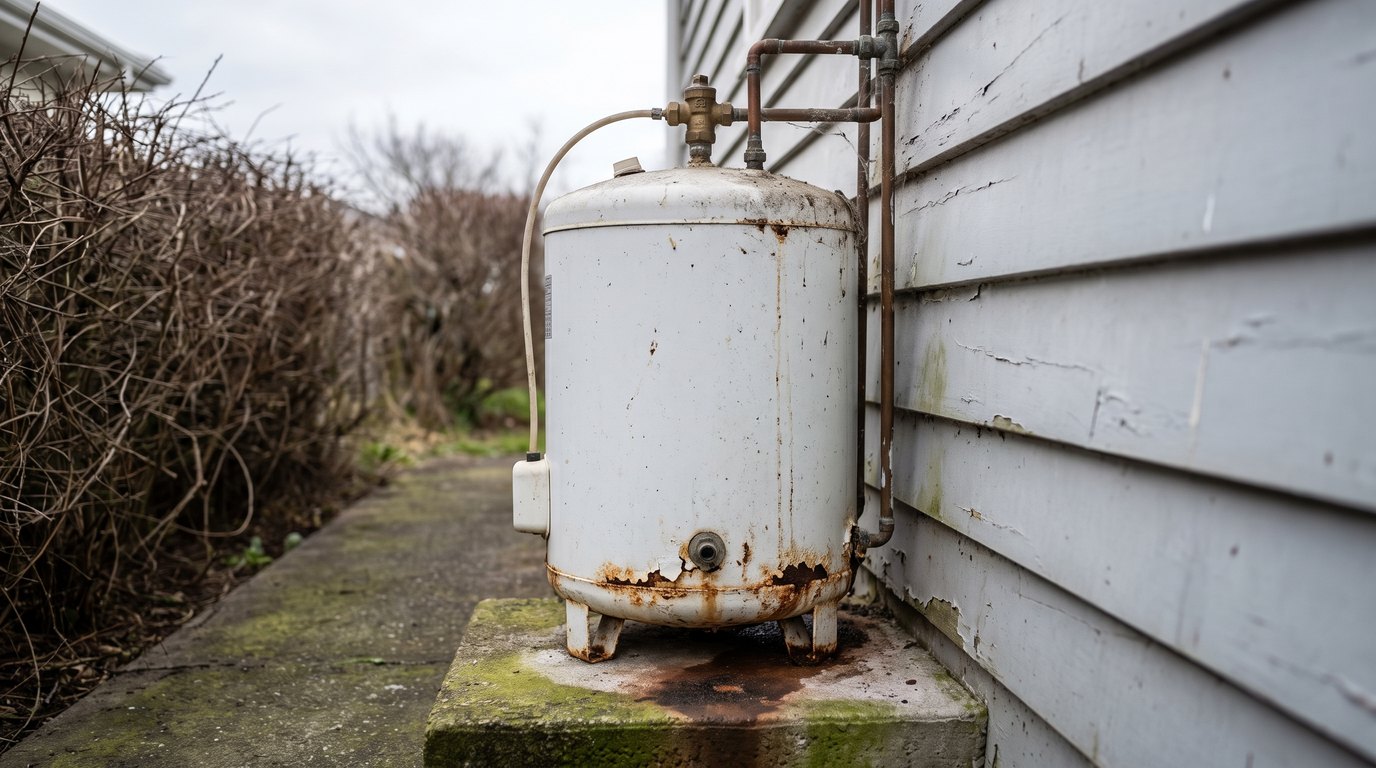
Hot water systems rarely fail politely. They tend to go on the coldest morning of the year, usually in a cupboard or down the side of the house where nobody has looked in a decade.
Victory Plumbing Hobart replaces hot water systems across Greater Hobart, and the same conversation comes up every time. The homeowner wants to know whether the unit in front of them can be patched up for another winter, or whether they are throwing good money at something that is already finished.
There is a reasonable answer to that, and it does not require guesswork. Here are the signs worth acting on, the point where repair stops making sense, and the local details that catch Hobart homeowners out when the new unit goes in.
How Long a Hot Water System Actually Lasts
Most storage systems give you somewhere between eight and fifteen years, depending on the type, the water running through it and whether it was ever serviced.
Age on its own is not a reason to replace anything. A twelve year old unit that is quiet, dry and still delivering full hot showers is doing its job. What age does change is the maths on repairs, because every dollar you spend on an old cylinder buys you less remaining life than the same dollar spent on a young one.
So the useful question is not how old is it. The useful question is what is it doing now, and how much life is left in the tank itself.
The Signs That Say Replace, Not Repair
Water pooling under the unit
This is the one that ends the conversation. A leak from a valve or a fitting can often be repaired. A leak from the tank itself cannot, because the cylinder has corroded through from the inside and there is no patch for that.
If you find damp concrete, a rusty ring at the base, or a slow drip that is not coming from the relief valve, treat it as a replacement and start planning rather than hoping.
Rusty or discoloured hot water
Run the hot tap and look at the water. If it comes through with a brown or reddish tinge, and the cold tap on the same fixture runs clear, the discolouration is coming from inside your cylinder.
That usually means the sacrificial anode has been consumed and the steel tank is now corroding. Sometimes a fresh anode buys time. Often, by the time you can see it in the water, the tank has already lost the argument.
Rumbling, banging or popping
A healthy system is quiet. Noise generally means sediment has built up on the bottom of the tank and water is boiling underneath it.
That layer forces the element or burner to work harder to heat the same volume, which shows up on your bill. It also concentrates heat against the tank wall, which brings failure forward.
Running out of hot water sooner than you used to
If the same household, with the same habits, now runs short halfway through the second shower, something has changed inside the unit. Sediment reduces the usable volume of the tank. A failed thermostat or a burnt out lower element does the same thing in a different way.
The distinction matters. A thermostat or an element is a genuine repair on a system with life left. A tank that has silted up over a decade is a replacement.
Repairs that are starting to stack up
One fault on an otherwise sound system is maintenance. Two or three call outs inside a year on a unit past ten years old is a pattern, and the pattern rarely improves.
A reasonable rule of thumb is that once the cost of the next repair approaches half the cost of a new system installed, replacement is the better use of the money. You are buying a warranty and a decade instead of a few more months.
A power bill that keeps climbing
Water heating is typically the second biggest energy consumer in Tasmanian households, according to Tasmania's Renewable Energy Coordination Framework. That means an ageing, sediment loaded hot water system shows up in your bill more visibly here than almost any other appliance.
If your usage habits have not changed but your bills have crept up over a couple of winters, the hot water system is worth ruling in or out before you go looking elsewhere.
Where Repair Still Makes Sense
Plenty of hot water faults are worth fixing, and a good plumber will tell you so.
Thermostats, elements, tempering valves and pressure relief valves are all replaceable parts. On a system under about eight years old, with a sound tank and no corrosion, replacing a failed component is usually the sensible call.
The same goes for a leak at a fitting, an isolation valve or a section of pipework. None of those are the tank, and none of them mean the system is finished. What we will not do is put a new element into a cylinder that is already weeping, because that money disappears within the year.
Three Local Details That Catch Hobart Homeowners Out
This is where national buying guides stop being useful, because the things that change the cost and the outcome of a hot water replacement in Hobart are specific to Tasmania.
Your electricity tariff may not follow the new system
Many older Hobart homes run their hot water on a legacy Aurora Energy tariff. The Residential Flat Rate arrangement, tariffs 31 and 41, included a separate cheaper rate for wired in heating and electric hot water. Tariff 61, the off peak with afternoon boost, was commonly used for the same purpose.
Both are now obsolete. Aurora Energy lists tariffs 31, 41 and 61 as no longer available to be installed, and TasNetworks stopped offering its flat rate network tariffs to new customers from 1 July 2024. Households that already have them connected keep them.
The catch is what happens when the metering or wiring changes. Aurora Energy notes that if work has been done at a property without informing TasNetworks or Aurora Energy, it may affect which tariffs are applied. Tariff 62, off peak night only, is still available for new connections and runs for nine hours between 10pm and 7am.
If you are on one of the closed tariffs, raise it before the job is booked, not after. It is a five minute conversation that can protect a rate you cannot get back.
The rebate most articles still point you to has closed
Search for hot water rebates in Tasmania and you will find plenty of pages promoting the Energy Saver Loan Scheme, the state's interest free loan of up to $10,000 for heat pump hot water, solar hot water and other efficiency upgrades.
That scheme closed to new applications at 11:59pm on 1 September 2025, and approved installations had to be completed by 30 November 2025. Some vendor and comparison sites have not caught up.
What does still apply is the federal Small-scale Renewable Energy Scheme. Solar water heaters and air source heat pumps remain eligible for small-scale technology certificates through the Clean Energy Regulator, and these are normally applied as a discount in your installer's quote rather than paid to you. The value declines each year as the scheme winds down towards its 2030 close, so the incentive is worth slightly less every January.
Cold air changes the heat pump maths
Heat pump hot water is efficient, and Tasmania's own guidance puts the saving at roughly 25 to 33 per cent less energy than a standard electric element system, typically paying back the extra upfront cost after four to six years.
Hobart's climate does complicate it. Heat pumps draw warmth from the surrounding air, so performance drops as ambient temperature falls. Colder conditions mean slower recovery and more reliance on the backup electric element, which is the part that costs money to run.
None of that rules a heat pump out here. It does mean you want a model rated to perform in cold conditions without leaning on its booster, sensible placement away from bedroom windows, and insulated pipework. The unit that suits a Queensland carport is not automatically the unit that suits a Glenorchy side passage.
What Tasmanian Law Requires
Two things surprise people, and both come straight from Consumer, Building and Occupational Services.
The first is that a straight swap is simpler than most expect. You do not need a plumbing permit to replace a hot water system if the model is like for like, in the same location, and connected to drinking water. Move it to a new location and your plumber must notify the permit authority. Move it to a new location on a new service and a permit is required before work starts.
The second is that none of this is do it yourself territory. Installation, repairs and maintenance of hot water systems in Tasmania must all be carried out by a licensed plumber. Penalties apply for unlicensed work, and unlicensed work will also cause you trouble with warranty and insurance.
There are temperature rules attached as well. Stored water must be kept at no less than 60 degrees to suppress Legionella and other bacteria, while a tempering valve must deliver no more than 50 degrees to showers, baths, basins and bidets. If your existing system predates that requirement, a replacement is when it gets brought up to standard.
Choosing a Replacement That Suits the House
Once replacement is settled, the decision is less about brands and more about the building.
Start with what fuel is genuinely available. Reticulated natural gas is patchy across Greater Hobart, so a gas unit may mean bottled LPG, which changes the running cost picture. If you are weighing the fuel question, our guide to gas hot water systems in Hobart covers coverage, costs and where gas still stacks up, and a comparison of heat pump against gas is worth reading alongside it.
Then size it for the household you will have, not just the one you have now. Systems last a decade or more, and the number of people in a house changes over that time. Undersizing produces cold second showers. Oversizing produces a bigger bill for capacity you never use.
Finally, think about where the unit can physically go, what access the installer has, and whether the existing pipework, valves and electrical connection are up to the new system. Those are the details that separate a straightforward morning's work from an expensive surprise, and they are exactly what a site visit is for.
Plan the Swap Before It Plans Itself
The worst time to choose a hot water system is the morning it dies, when the priority is getting anything working rather than getting the right thing working.
If your unit is showing two or more of the signs above, get it assessed while you still have hot water and time to compare options. A replacement chosen calmly, with the right tariff protected and the right system for the house, will serve you far better than an emergency swap.
Victory Plumbing Hobart handles hot water system replacement and installation across Greater Hobart, from assessing whether your current unit is worth saving through to a compliant install. If your hot water is showing its age, get in touch and we will take a proper look before anything gets replaced.