Solar Hot Water Systems: Are They Worth It in Tasmania?
If you are weighing up a solar hot water system for a Hobart home, the honest answer is that it depends on more than the brochure suggests. Water heating is one of the largest line items on a household energy bill, so the savings are real. What changes the maths down here is our climate, our grid and the way the federal discount is calculated in Tasmania.
Victory Plumbing Hobart works on hot water systems across Greater Hobart every week. Here is what we tell homeowners before they commit to solar.
How a solar hot water system works
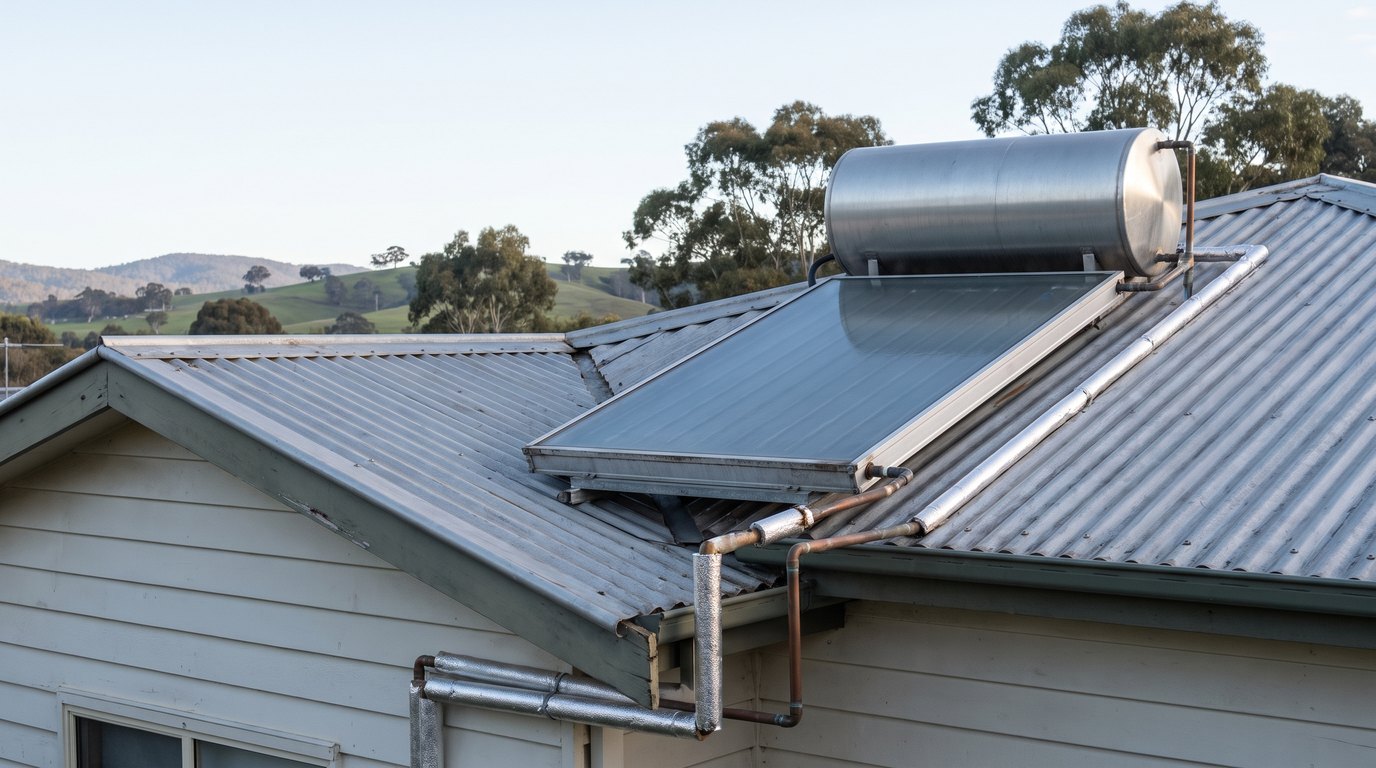
Every solar hot water system has two working parts. Collectors on the roof absorb heat from the sun, and an insulated tank stores the heated water until you need it.
Because the sun does not shine on demand, every system also carries a backup booster. That booster is either an electric element in the tank or a gas burner, and it tops the water up on cloudy days and through winter.
Collectors come in two forms:
- Flat plate collectors are glass-fronted panels with a network of copper pipes inside. They are the cheaper and sturdier option.
- Evacuated tubes are vacuum-sealed glass tubes. The vacuum insulates them, so they hold performance better in cold weather, but they cost more and are more fragile.
The tank can sit in two places:
- Thermosiphon systems bolt the tank onto the roof beside the collectors and rely on natural circulation, with no pump. They are usually cheaper, but the roof has to carry the weight of a full tank.
- Split systems keep the collectors on the roof and put the tank on the ground, with a pump moving water between them. More flexible, usually dearer.
One question we get constantly: does the water stay hot overnight? Yes. A well-insulated tank holds its temperature through the night, and the booster covers anything the sun did not.
What a solar hot water system costs
Expect roughly $4,000 to $8,000 fully installed for a solar thermal system. That range is consistent across CHOICE's buying guide and the NSW Government's household energy pages, and it matches what we see quoted around Hobart.
Roof-mounted tanks generally cost less than split systems, and electric-boosted systems cost less than gas-boosted ones. A heat pump, the main alternative, sits at roughly $3,000 to $7,000 installed.
Anything that complicates the job moves the number. Awkward roof access, a roof that needs reinforcing, relocating the tank or new electrical work all add cost, which is why we will not quote a solar changeover without seeing the property first.
The Tasmanian catch nobody mentions: our STC zone
The federal "rebate" on solar hot water is not really a rebate. It is a discount funded by small-scale technology certificates (STCs) under the Small-scale Renewable Energy Scheme, which your installer usually claims and passes back to you inside the quoted price.
Here is the part that gets left out of national advertising. The Clean Energy Regulator divides Australia into four postcode zones for solar water heaters and five zones for air source heat pumps, based on climate and solar radiation levels.
Every Tasmanian postcode, 7000 through 7470, sits in Zone 4 for solar water heaters and Zone 5 for heat pumps. In both cases that is the lowest-radiation zone on the scale. The same model earns fewer certificates in Hobart than it does in Brisbane, so the discount you actually receive here is smaller than the headline figures used in mainland advertising.
There is a second moving part. The deeming period, which sets how many certificates a system can create, is five years for systems installed in 2026, and it drops by one year annually until the scheme ends in 2030. Put simply, the federal discount on solar hot water shrinks every year you wait.
The rebate mistake we see most often in Tasmania
Tasmania's Energy Saver Loan Scheme offered interest-free loans of up to $10,000 for energy efficiency upgrades, including hot water systems. That scheme closed on 1 September 2025. Funding was exhausted after it supported $62 million in loans across roughly 7,500 households and small businesses.
Plenty of pages still promote it as though it were open. If a supplier builds an interest-free loan into your budget, ask them to show you the current scheme in writing before you sign anything.
Be equally careful with rebate figures you find online. New South Wales runs a hot water upgrade incentive worth up to $900 or $550 depending on the changeover, but those amounts are for NSW residents and do not apply in Tasmania. For current Tasmanian support, check the federal energy.gov.au rebates directory rather than an installer's landing page.
Solar thermal or a heat pump?
This is the real decision for most Hobart homeowners, and location matters more than people expect.
A solar thermal system in Hobart will typically supply around half of a household's hot water from the sun across the year, according to SolarQuotes. In Darwin the same style of system can approach 100 per cent. Down here the booster simply does more of the work, particularly from May through August.
A heat pump takes a different route. It moves heat out of the surrounding air into the tank rather than generating heat directly, which makes it at least three times more efficient than a conventional electric element. It needs no roof space, installs much like a standard outdoor tank, and can be timed to run in the warmest part of the day.
Industry advice has shifted on this. With rooftop solar panels now relatively cheap, many advisers suggest using the roof for panels and pairing them with a heat pump or a timed electric tank, rather than dedicating roof area to thermal collectors. Our guide to heat pump versus gas hot water walks through the running costs, and our breakdown of gas hot water systems covers where gas still makes sense.
The counterpoints are worth knowing. Heat pumps have a compressor that makes noise much like an outdoor air conditioner, so placement near a neighbour's bedroom needs thought, and Tasmania sits in the lowest certificate zone for heat pumps as well.
The emissions argument is different in Tasmania
On the mainland, moving off electric or gas hot water is a meaningful carbon decision. In Tasmania it mostly is not, and it is worth being straight about that.
Renewables accounted for 97.5 per cent of Tasmania's electricity generation in 2025, with hydro alone supplying 71.8 per cent, according to the Australian Energy Statistics. In New South Wales over the same period, coal still made up 55.2 per cent.
In practice, a Tasmanian household running a conventional electric hot water tank is already heating water with mostly renewable electricity. The case for solar hot water here rests on your power bill rather than your carbon footprint. That is a perfectly good reason to install one, but it should be the reason.
Payback: what to expect
Households switching from a conventional electric or gas tank to solar or a heat pump usually see hot water running costs fall by 70 to 80 per cent.
If you are replacing an electric system, CHOICE puts payback at around five years or less for a four-person household using a decent amount of hot water. Replacing gas generally takes longer, in the range of five to ten years, because gas is already a reasonably efficient way to heat water.
Then apply the Tasmanian adjustment. With roughly half your annual hot water coming from the sun in Hobart, expect payback to sit at the longer end of those published ranges. Usage is the other lever: a large household taking long showers pays a system off far faster than a couple who shower quickly.
Permits, licensing and safety rules in Tasmania
This part trips people up, and getting it wrong can cost you at sale time.
Under Consumer, Building and Occupational Services (CBOS) rules, replacing a hot water system like-for-like, in the same location, connected to drinking water, does not require a plumbing permit. It does still require a licensed plumber.
Installing a system in a new location on an existing service also requires a licensed plumber, and your plumber must notify the Permit Authority once the work is finished. A new location with a new service requires a plumbing permit from the Permit Authority before work begins.
Solar thermal is rarely a straight swap. Collectors go on the roof and the tank often moves, so a solar changeover usually falls into the second or third category rather than the first. Ask your installer which one applies before the job starts.
Two temperature rules apply to every heated water installation in Tasmania:
- A tempering valve must be fitted and set to deliver water at 50°C to sanitary fixtures such as showers, baths and basins, to reduce the risk of scalding.
- Stored water must be kept at no less than 60°C to control Legionella and other bacteria.
All hot water repairs and maintenance in Tasmania must be carried out by a licensed plumber, and you can check any plumber's licence on the Tasmanian occupational licensing register.
Looking after a solar system in Hobart
Solar and heat pump systems are not high maintenance, but they are not maintenance-free either. An inspection every five years is sensible, exactly as it is for a conventional tank.
A solar service costs a little more than a standard one, because someone has to get onto the roof to check and clean the collectors and connections. A full service typically runs $300 to $500 depending on parts and labour, with pressure relief valves and sacrificial anodes the usual replacement items.
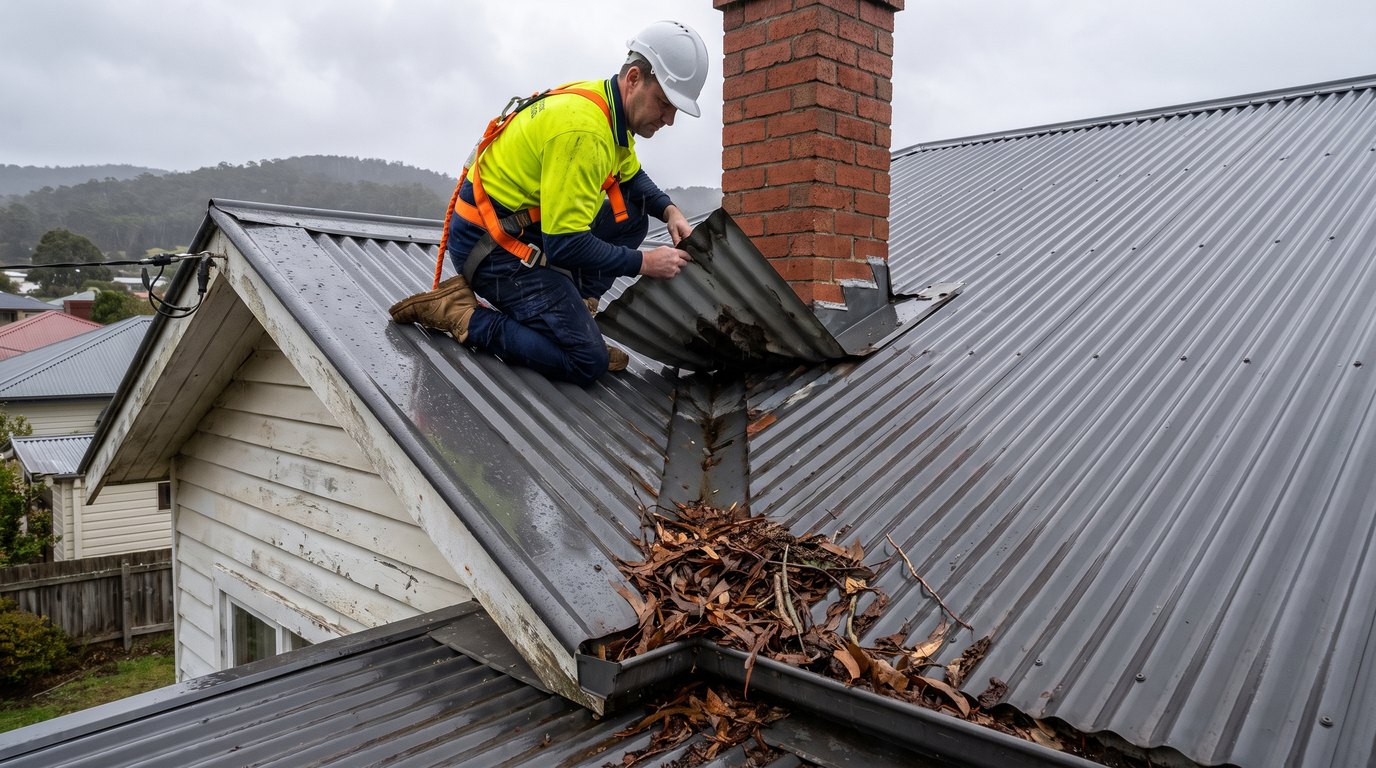
In our climate there are two local jobs worth staying on top of. Leaf litter, lichen and moss build up on collectors in shaded and treed Hobart suburbs and quietly cut your solar yield. Overhanging branches that were fine in December can shade the panels badly at a low winter sun angle. If you are already booking routine hot water servicing, ask for the collectors to be included.
So, is solar hot water worth it in Tasmania?
It stacks up well if:
- your roof faces roughly north, gets good sun and can carry the load
- you are replacing an ageing electric system rather than a working gas one
- your household uses a lot of hot water
- you plan to stay in the home long enough to see the payback
It is a harder case if:
- you are a one or two person household with modest hot water use
- your roof is shaded, south-facing, heritage listed or already earmarked for solar panels
- your old system has just failed and you need hot water this week, since thermal solar takes longer to install than a straight tank swap
For a lot of Hobart homes, the sharper answer in 2026 is a heat pump paired with rooftop solar panels, simply because the panels earn their keep year round while thermal collectors are working at around half capacity through our winter. For homes with the right roof and heavy hot water use, solar thermal still earns its place.
Getting the decision right
Get at least three quotes and ask each installer the same questions. Is the model listed on the Clean Energy Regulator's register of solar water heaters, since only listed models attract certificates? Is the STC discount included in the quoted price, and at what certificate value? What tank size suits the household? What is the warranty period, and will they insulate the tank and all hot water pipework? Will they remove and recycle the old tank?
Then have someone look at the actual roof. Nobody can tell you whether solar hot water suits your home over the phone, and any recommendation about system type, tank size or placement should follow an inspection rather than precede it.
If you want a straight assessment of what will work on your roof and what it is likely to cost, the team at Victory Plumbing Hobart can talk it through with you. Get in touch and we will look at your existing system, your roof and your hot water use before recommending anything.